

Explaining essential law dictionary legal terms helps grasp US legal concepts. A reliable resource for clear definitions.
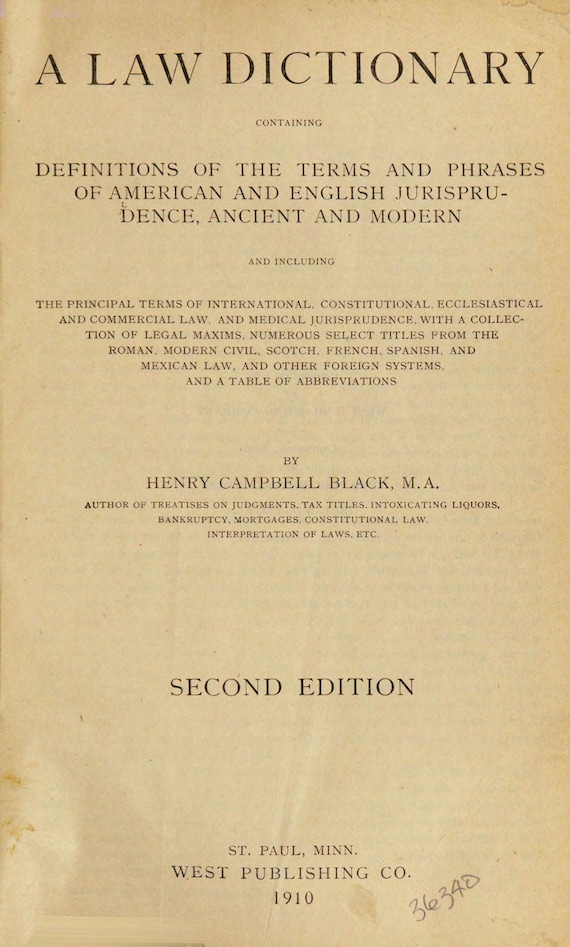
Understanding legal concepts often starts with defining the words used to express them. The legal field, whether in the US or elsewhere, employs specific language that can be complex for those outside the profession. A law dictionary legal terms resource serves as an essential tool for students, professionals, and anyone seeking to clarify the precise meaning of legal vocabulary. It bridges the gap between everyday language and the rigorous definitions required in legal contexts, providing a foundation for comprehending statutes, case law, and court proceedings.
Overview
- A law dictionary legal terms guide offers definitions for specialized words found in legal documents.
- These resources explain jargon related to contracts, criminal law, property, and more.
- They often include Latin phrases and historical terms still relevant in modern legal practice.
- Understanding these terms is crucial for interpreting statutes and court decisions.
- Many terms have specific meanings in law that differ from their common usage.
- Law dictionaries can provide context on how terms are applied in different legal areas.
Understanding Core Law Dictionary Legal Terms
A foundational aspect of legal study involves becoming familiar with basic law dictionary legal terms. These are the words that form the bedrock of almost every legal discussion. For instance, “plaintiff” refers to the party who initiates a lawsuit, while “defendant” is the party being sued. “Statute” means a written law passed by a legislative body, and “precedent” describes a legal principle or rule established in a previous case that is binding on subsequent courts when deciding similar cases.
Other crucial terms include “contract,” which is a legally binding agreement between two or more parties, and “tort,” a civil wrong that causes a claimant to suffer loss or harm, resulting in legal liability for the person who commits the tortious act. These basic definitions help clarify fundamental relationships and actions within the legal system. They are often the first entries one consults in a law dictionary legal terms compilation.
Specialized Areas and Complex Legal Terminology
Beyond the basics, a law dictionary delves into terms specific to various branches of law. Environmental law, for example, might feature “mitigation” (actions taken to lessen the severity of something) or “riparian rights” (the rights of landowners whose land abuts a body of water). In corporate law, terms like “fiduciary duty” (a legal obligation to act in the best interest of another party) or “articles of incorporation” (a legal document establishing a corporation) are common.
Family law introduces terms such as “alimony” (financial support paid by one spouse to another after separation or divorce) or “custody” (the legal right to make decisions for a child). Real estate law involves “easement” (a right to use another person’s land for a stated purpose) and “lien” (a right to keep possession of property belonging to another person until a debt owed by that person is discharged). Each field presents its own vocabulary, essential for clear communication and legal accuracy.
The Purpose of a Law Dictionary Legal Terms for Clarity
A law dictionary serves several key purposes. Primarily, it offers clear and precise definitions, removing ambiguity that can arise from common language. Many words have a specific legal meaning that differs significantly from their everyday usage. For example, “assault” in a legal context is often the threat of harm, not necessarily the physical act itself. “Battery” refers to the unlawful physical contact. Without a law dictionary legal terms resource, such distinctions can lead to confusion.
These dictionaries also provide context. They might explain the origin of a term, how it has evolved over time, or how it is applied in different jurisdictions. For those engaging with legal documents, court opinions, or legislative text, a law dictionary is indispensable for ensuring correct interpretation. It fosters a deeper understanding of legal principles, helping users grasp the nuances that often dictate case outcomes or policy implications.
Everyday Use of Law Dictionary Legal Terms
Even for individuals not directly involved in the legal profession, encountering law dictionary legal terms is common. Reading news articles about court cases, reviewing a contract, or understanding government regulations can bring up unfamiliar legal language. Knowing where to find definitions for terms like “subpoena” (an order to appear in court) or “habeas corpus” (a legal recourse against unlawful imprisonment) empowers people to better understand their rights and responsibilities.
For small business owners, grasping terms such as “liability,” “trademark,” or “patent” is vital for protecting their assets and operations. When dealing with personal legal matters, like writing a will or purchasing property, clear definitions for terms like “testamentary capacity” or “deed” ensure compliance and proper procedure. This knowledge helps individuals make informed decisions, whether navigating personal affairs or observing public legal discourse.


